
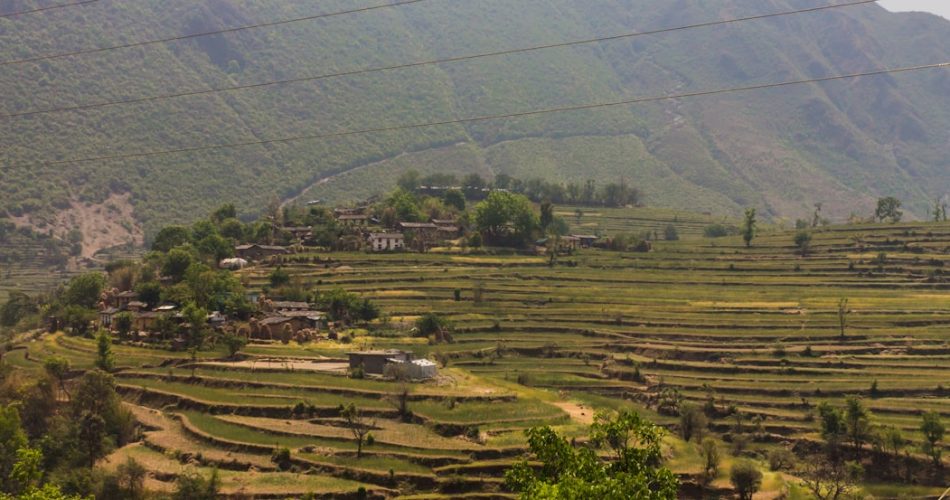
The Plant That Grew Everywhere
Before it was contraband, cannabis was just another crop in Nepal’s hills. It grew wild along trails from Pokhara to Mustang. Farmers pulled it from their fields as a weed, dried it for rope, ground it into paste for aches and fevers, and offered it to Shiva during festivals. It was as ordinary as maize.
For centuries, cannabis was woven into the fabric of Nepali life — literally. The fiber made rope, bags, and nets. The seeds were pressed for oil. The leaves and flowers were used in Ayurvedic medicine for insomnia, digestive issues, and pain. In many communities, a cup of bhang was as routine as evening tea.
Then the world changed its mind. And Nepal’s cannabis industry — one of its oldest agricultural traditions — disappeared almost overnight.
When Nepal Supplied the World
Nepal’s cannabis wasn’t just locally consumed. The country was a recognized source of high-quality cannabis products, particularly hashish, which found its way to markets in India, the Middle East, and Europe. The Himalayan climate — high altitude, intense sun, distinct wet and dry seasons — produced plants with characteristics that commanded a premium.
The trade wasn’t a shadow operation in many hill districts. Families had been growing and processing cannabis for generations. The knowledge was passed down: when to harvest, how to dry, which plants had the strongest fiber and which had the most potent resin. It was agricultural expertise, the same kind farmers apply to any cash crop.
That expertise didn’t disappear when the laws changed. It went quiet.
The 50-Year Ban That Changed Everything
Nepal’s 1973 Narcotic Drugs Act, pushed partly by international pressure and treaty obligations, criminalized cannabis cultivation, possession, and trade. The law was sweeping. It didn’t distinguish between the cannabis growing wild in every hill district and the processed hashish being smuggled across borders. It was all illegal.
The impact was immediate and brutal for rural communities. Farmers who had grown cannabis alongside their other crops now faced the choice of uprooting it or risking prosecution. The knowledge — generations of it — stopped being passed down. Processing facilities shut down. The export market collapsed.
But the plant never left. Walk any mid-hill trail in Gandaki Province today, and you’ll still see it growing along the edges of cornfields and on uncultivated slopes. The law changed. The ecology didn’t.
This is the context that almost every news article misses. The Gandaki budget isn’t introducing something foreign to Nepal. It’s trying to bring a native industry back from the dead.
What Gandaki’s Budget Actually Says
On Asar 1, Gandaki Province’s Minister for Economic Affairs Jeet Bahadur Sherchan presented the budget for fiscal year 2083/84. Buried in the document was a line that signals the most significant policy shift on cannabis in Nepal in half a century:
“A system based on research, production and value-chain development will be established by regulating cannabis cultivation for medicinal and industrial purposes.”
Let’s be clear about what this does and doesn’t say. The announcement is for two specific purposes:
- Medicinal and pharmaceutical use — cannabis-based medicines, extracts, and compounds for therapeutic applications
- Industrial applications — hemp fiber for textiles, construction materials, bioplastics, paper, and food products
This is not about recreational legalization. The budget explicitly states that production must remain within approved uses and be subject to a comprehensive regulatory mechanism covering cultivation, processing, standards, marketing, and pricing.
What happens next matters more than the announcement itself. The provincial government must draft detailed legislation — licensing procedures, production quotas, monitoring systems, and compliance requirements. Without that legal framework, the budget line is just words on paper.
The Billion-Dollar Opportunity Nobody’s Talking About
Here’s what the standard news coverage won’t tell you. The global legal hemp market was valued at over $5 billion in 2024 and is projected to exceed $15 billion by 2030, growing at more than 15% annually. The medicinal cannabis market is even larger — estimated at over $30 billion globally and projected to double within the decade.
Countries that moved early are already capturing significant shares. Canada, Thailand, Colombia, and several European nations have built regulated industries that generate export revenue, create rural employment, and attract foreign investment. Thailand, which legalized medical cannabis in 2018 and later allowed industrial hemp, is projected to build an industry worth over $2 billion by the end of the decade.
Nepal has advantages that most of these countries don’t:
- Climatic suitability — Nepal’s altitude range, sun exposure, and growing seasons match the plant’s natural requirements better than most of the world
- Existing genetic diversity — wild and landrace strains have adapted to specific microclimates over centuries, creating unique chemotypes with medicinal potential
- Traditional knowledge — older generations still hold cultivation expertise that can’t be bought or imported
- Low labor costs — cannabis and hemp are labor-intensive crops, giving Nepal a production cost advantage
- Proximity to large markets — India and China represent massive potential demand for both medicinal and industrial hemp products
The gap between Nepal’s potential and its current position is almost entirely policy-driven. Every year the country waits, other nations capture more market share, develop more processing infrastructure, and write the regulations that Nepal could have written first.
The Three Hurdles Nobody’s Solved Yet
The Fiscal Nepal article covers the announcement accurately. But it doesn’t tell you why this is harder than it looks.
Hurdle 1: Federal law contradicts provincial policy. Nepal’s Narcotic Drugs Act 1976 is a federal law that criminalizes cannabis cultivation and possession nationwide. A provincial budget announcement cannot override federal legislation. Until the federal government either amends the law or creates a clear exemption pathway, anyone who cultivates cannabis under Gandaki’s framework would technically still be violating national law. This legal gray area must be resolved before a single seed goes into the ground legally.
Hurdle 2: International treaties. Nepal is a party to the 1961 United Nations Single Convention on Narcotic Drugs, which restricts cannabis cultivation to licensed scientific and medical purposes. Any regulated industry must operate within these treaty obligations or risk international sanctions. This isn’t impossible — Canada and Thailand navigated the same treaties — but it adds complexity to every regulatory decision.
Hurdle 3: The infrastructure gap. Even if the legal hurdles are cleared, Nepal lacks the processing facilities, testing laboratories, quality certification systems, and export logistics that a regulated cannabis industry requires. Growing the plant is the easy part. Building an industry around it that meets international pharmaceutical and industrial standards is a multi-year infrastructure challenge.
None of these hurdles are deal-breakers. But pretending they don’t exist — which most coverage of this announcement does — doesn’t help anyone.
What This Actually Means for a Farmer in Gandaki
Let’s make this concrete. A farmer in Kaski or Lamjung currently grows maize, millet, or vegetables on a small plot. If cannabis cultivation becomes legally viable, what changes?
In the best case: the farmer joins a cooperative, receives certified seeds, gets training on quality standards, and sells the harvest to a licensed processor at a guaranteed price. The processor converts it into fiber for textiles or extract for medicine. A portion is exported. The farmer’s income diversifies.
In the worst case: the federal law never clarifies, banks refuse to finance cannabis-related businesses, processors don’t appear because the regulatory timeline is uncertain, and farmers who planted in hope end up holding a crop they can’t sell legally.
The difference between these two outcomes is not about whether cannabis is good or bad. It’s about whether the regulatory framework is built properly, enforced consistently, and aligned across provincial and federal levels.
The Bottom Line
Gandaki Province’s budget announcement is the most significant step toward regulated cannabis cultivation in Nepal’s modern history. It represents a provincial government willing to test boundaries that the federal government has avoided for decades.
But it is not yet a functional industry. It is a policy direction. The detailed legislation hasn’t been drafted. The federal law hasn’t been reconciled. The infrastructure doesn’t exist. Farmers haven’t been trained. Export markets haven’t been identified.
The real story isn’t the announcement — it’s what happens in the next 24 months. If Gandaki follows through with a robust legal framework, invests in processing infrastructure, and secures federal cooperation, it could transform the province’s agricultural economy and set a precedent for the entire country.
If it stalls — and plenty of provincial initiatives in Nepal have stalled — this will be remembered as another good idea that died in committee.
The plant is still growing in the hills. It has been there all along. The question is whether Nepal’s laws will finally catch up to its ecology.

